Teeth, Talent, and a Mission: Meet the Veterinarian Bringing Dentistry to the HBSPCA
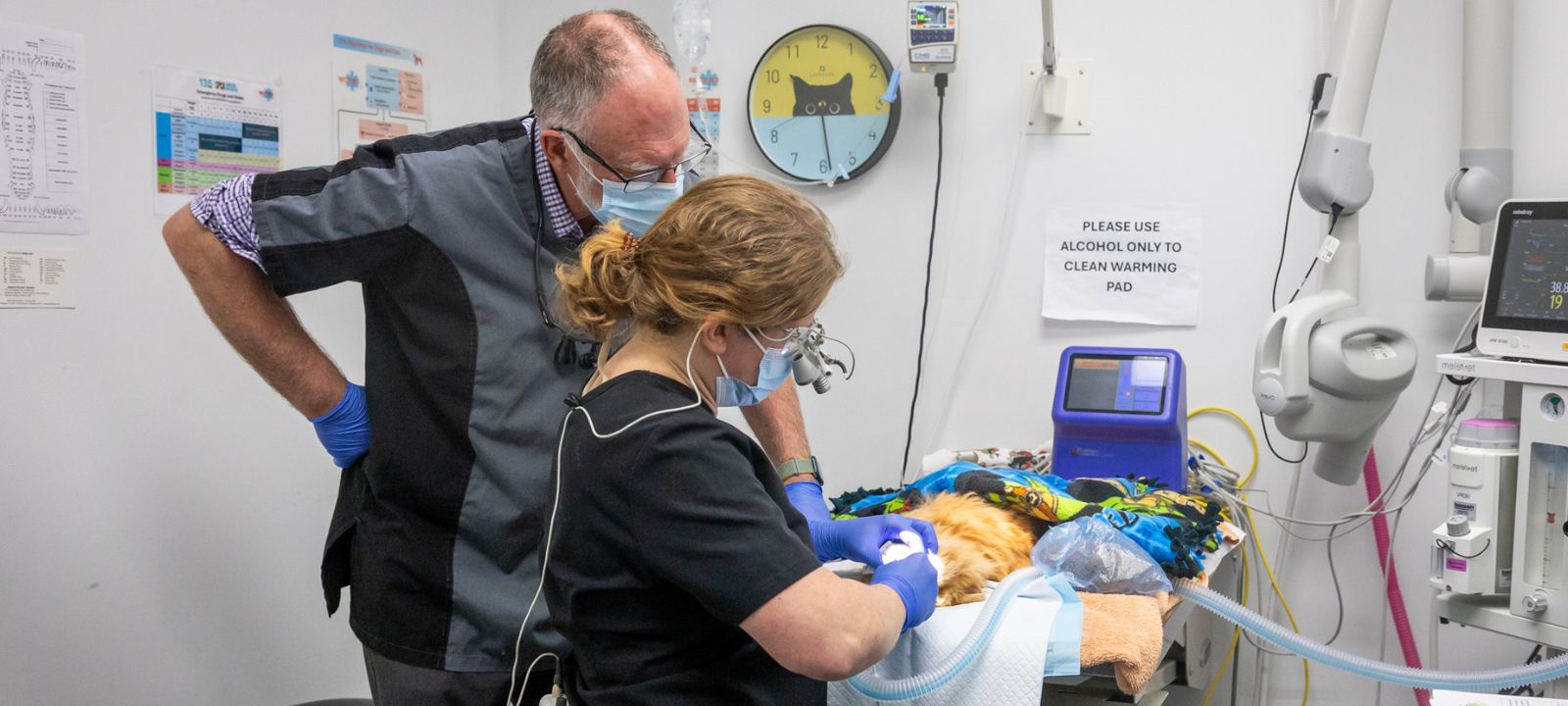
For Dr. Dave Kerr, helping one animal is good, but teaching another veterinarian how to help thousands is even better.
Dr. Dave Kerr has spent decades in veterinary medicine, but these days, you'll find him at the Hamilton Burlington SPCA doing something a little different: performing dental procedures on shelter animals while teaching another veterinarian the skills to do the same.
Dr. Kerr graduated from the Ontario Veterinary College in 1984, back when, as he put it, "nobody was taught that dogs and cats even had teeth." Over the years, he saw firsthand how many animals were quietly suffering with untreated dental pain, and by 1986, he had started learning veterinary dentistry himself. He's been building on those skills ever since.
That path eventually led him to HBSPCA, where he now works on shelter animals while mentoring another veterinarian in dentistry, someone who, like Dr. Kerr once was, never received formal dental training during veterinary school.
"The vast majority of small animal veterinarians in Ontario, and even in Canada, have very little training in veterinary dentistry," he explained. By teaching one veterinarian, Dr. Kerr says the impact multiplies far beyond the animals he treats directly. "If I'm helping a veterinarian improve his or her skills in veterinary dentistry, then I've kind of helped thousands of animals, because that veterinarian is going to continue to practice."
The need for this kind of care is bigger than most people realize. The tricky part is that dogs and cats are remarkably good at hiding mouth pain. "Dogs are pretty smart, and they know if they don't eat, they don't live," Dr. Kerr said, describing how animals will quietly adapt around the pain rather than show it, chewing on one side of their mouth or swallowing food whole.
.jpg)
Dr. Kerr's connection to HBSPCA is also rooted in something bigger than the work itself. After owning a practice for 20 years, he made the decision to step away from the business side of veterinary medicine to focus purely on care, including volunteering for spay and neuter clinics across Ontario, Canada, and abroad. Bringing dentistry into that mission, at a fraction of the cost of general practice, was a natural next step.
"I have a mission statement for my life," he said, "and part of my mission statement is to use my talents to help animals."
His impact hasn't gone unnoticed by the veterinarians he's trained, either. Manjot G., who recently trained under Dr. Kerr at HBSPCA, shared this reflection on the experience:
"Dr. Kerr is the perfect mentor, as he is as knowledgeable as he is patient. His passion for dentistry imbibes the like in any mentee. Learning is fostered in a judgement-free zone. Questions are not only welcomed but encouraged. There is a certain level of comfort training under someone who is skilled and confident enough to be able to weather any mistakes you may encounter. That really frees your mind from the fear of failure and instead you can focus on learning as much as possible. This is an amazing program designed to help those pets in need while sharing the wealth of knowledge Dr. Kerr possesses via the framework of the HBSPCA. For anyone interested in the opportunity, don't think twice, as you will not regret it."
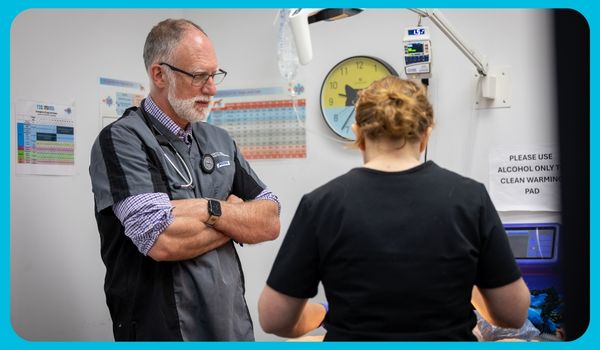
Karen R., Director of Animal Care at HBSPCA, has seen that same generosity firsthand since Dr. Kerr first started volunteering with the organization a couple of years ago, first through a high-volume spay and neuter program before his passion for dentistry led him into this new role. "He's just such a gentle, kind soul. He's so patient. He's such a wonderful teacher, and anybody who has the opportunity to share time with him is very, very lucky," Karen said.
Even though most veterinarians receive some dental training in school, Karen says many still lack confidence in putting it into practice. "He meets them where they are in their dental journey," she explained. "He has a conversation with them. He shares time with them, and really works on the things that make them kind of step back from dentistry, and really gives them some more confidence."
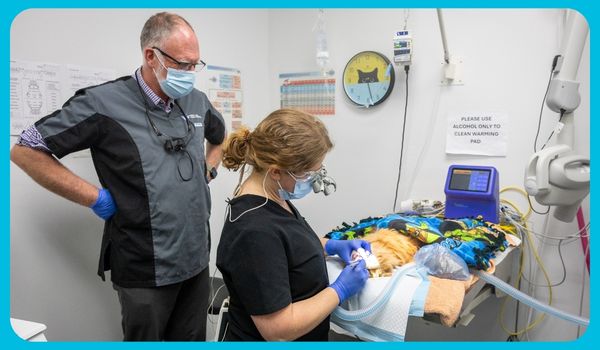
That same warmth shows up the moment he walks through the door. "He has such great energy from the minute he comes in," Karen said. "In the morning, he's saying good morning to everybody, checking in on everybody. We love having him with us, and he's with us about 8 to 10 days a month. So we look forward to those days."
Looking ahead, Dr. Kerr hopes to see a future where veterinary dentistry becomes preventative rather than reactive, where regular dental checkups catch disease early enough that extractions become far less necessary. Until then, he's focused on doing what he can, one procedure, and one mentee at a time. "I want to help as many animals as I possibly can," he said. "This is like a multi-level marketing thing that I can help them do, to help dogs and cats have pain-free mouths."